

A hydroponic shipping container farm cost is more than the price of an empty box. The budget has to cover the shell, growing system, lights, climate gear, water treatment, controls, site work, power, labor, and replacement parts. This guide shows which lines belong in a first budget and which ones need a current quote. It does not promise a yield or a profit.
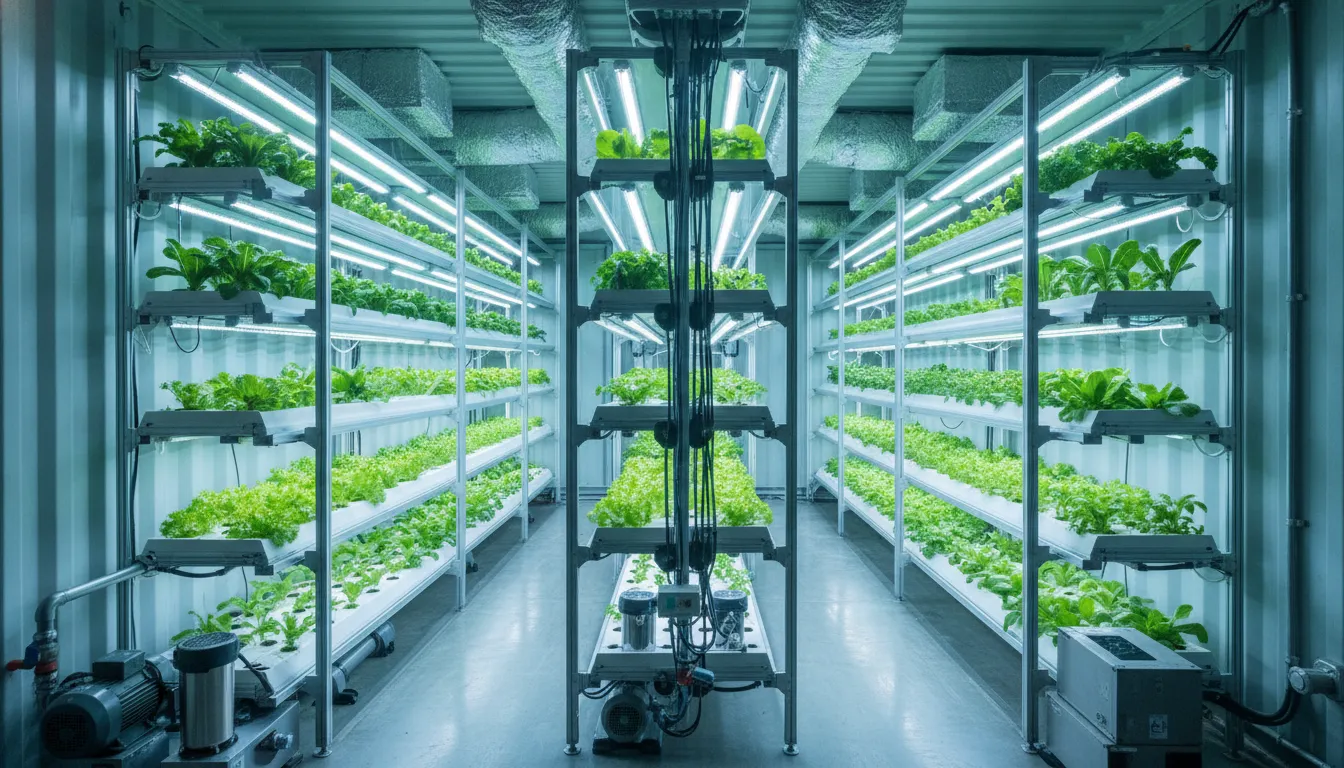
A container farm budget should cover the structure, growing system, utilities, site, and ongoing operation.
What is included in hydroponic shipping container farm cost?
Split the budget into three layers before you compare vendors. Mixing them makes a cheap shell look like a finished farm.
- Capital cost:
the container and the equipment that turns it into a growing room.
- Site and installation cost:
delivery, placement, a pad, utility connections, electrical work, and commissioning.
- Operating cost:
electricity, water, nutrients, seeds, packaging, labor, repairs, sanitation, and insurance.
A turnkey price can be easier to compare, but it may hide delivery, training, software, and startup supplies inside one number. A low container price is not a low farm cost if the unit still needs insulation, power, climate equipment, and a growing system.
Use published benchmarks as context, not a quote
There is no single price for a container farm. Crop, rack layout, automation, container condition, utility capacity, climate, and delivery distance all change the result. One public report is useful for scale. It is not a current bid for a Mann's Cans project.
Published reference | What it reported | How to use it |
Government of Alberta vertical farming case study, 2021 | The study described new insulated containers in the five-to-six-thousand-dollar range. It described finished systems with racks, lights, and other growing equipment in a much higher six-figure range. It also said optional add-ons could add a five-figure amount. | Use it only as a dated example of the gap between a shell and a finished system. Do not treat it as a current U.S. quote. |
Same report, small-system lighting example | One model used about 6 kW of lighting for 14 hours a day, or about 30,660 kWh a year for the lights. | Use the method, then replace the load and the electric rate with your own quote. Do not copy the annual bill. |
The Alberta report says its models are an economic look at sample turnkey systems, not a full business plan. Read the Government of Alberta vertical farming case study, then replace every figure with current supplier and site quotes.
Capital equipment categories to price
Container and interior build-out
The container is the shell, not the farm. Price a new or used 20-foot or 40-foot unit, plus corrosion checks, doors, floor condition, lining, insulation, and washable surfaces. Also list penetrations, light mounts, service access, and drainage.
Ask whether the quote includes modifications or only the delivered box. Aisle width, rack height, and repair access all depend on the interior layout. A plan that packs in more growing surface can leave too little room to clean, harvest, or fix a pump.
Hydroponic growing system
Price the growing method as one system. That means channels or towers, trays, racks, reservoirs, pumps, plumbing, valves, filters, drains, and nutrient dosing. A simple layout may need more daily labor. A highly automated layout costs more up front and adds sensors and parts that need support.
Ask what "capacity" means. A rack count does not tell you usable growing area, crop fit, or the labor to seed, clean, harvest, and reset. Do not treat a claimed production number as a guaranteed yield.
LED grow lighting
Lighting cost includes fixtures, drivers, mounts, controls, wiring, and later replacement. Compare wattage, hours, dimming, light spread, heat, and warranty. Do not compare fixture count alone.
Lights are also an operating cost. Model the electric bill before you pick fixtures. A brighter layout can raise both the equipment price and the monthly power bill.
HVAC, dehumidification, and air movement
Climate gear may include heating, cooling, dehumidification, fans, ductwork, controls, and condensate handling. The right size depends on the shell, the light load, the crop, outdoor weather, and how often the doors open.
Do not size HVAC from container volume alone. Ask for a load calculation. Confirm whether the quote includes the disconnect, the condensate drain, controls, startup, and a service plan. In a sealed box, lights and dehumidifiers can drive both the electric load and the water plan.
Water treatment and nutrient management
Water costs can include filters, treatment such as reverse osmosis, tanks, pumps, dosing, pH and EC checks, sanitation gear, drains, and wastewater handling. Test the source water first. Hardness, salts, and other contaminants can change the equipment and how often filters need replacement.
Also budget for test kits, calibration fluid, nutrients, and cleaning chemicals. Add a plan for a failed pump, a clogged filter, or a bad sensor. The cheapest starter kit can cost more later if consumables and service intervals are left out.
Controls, monitoring, and electrical safety
A farm may use sensors, timers, dosing controls, alarms, remote monitoring, data logs, and an emergency shutoff. List any software or connectivity fee apart from the hardware. Also write down what happens if the internet, a sensor, a pump, or a controller fails.
Electrical design belongs to a licensed electrician and the local authority. They should review service size, disconnects, grounding, wet-location gear, and any fire rules that apply. Ask whether the quote includes drawings, inspections, utility upgrades, and final sign-off. Those items change by location, so a generic online range is not a safe estimate.
Site, delivery, and installation costs
Site work is easy to miss because the farm is sold as a self-contained unit. The site still needs a level support surface, delivery access, placement clearance, drainage, power, and water. It also needs room to service the equipment. Delivery may need a crane or other placement gear.
The DIY shipping container farm guide is the brief's build-path resource for turning a container into a growing space. The live shipping container greenhouse guide covers shell cost, light, ventilation, insulation, and DIY work versus hired labor for a greenhouse. Do not copy either budget onto a sealed hydroponic farm. For access and placement, use the property preparation guide for container delivery.
Ask for an installation scope that names who does each job:
Delivery, unloading, and final placement.
Pad, grading, drainage, anchors, and access work.
Electrical service, panel capacity, disconnects, wiring, and utility fees.
Water supply, drains, wastewater, and freeze protection where needed.
Assembly, plumbing, controls, commissioning, and training.
Permits, inspections, engineering, insurance, and a contingency for site surprises.
Mann's Cans also explains shipping container foundation options. A farm may need more review than a storage container, because water, power, and occupied equipment change the site.
How to build the operating budget
Electricity
Start with nameplate power and a realistic schedule. For each load, use this formula: annual kWh equals running kW times hours per day times days per year.
The Alberta case study is only an illustration. It described about 6 kW of lighting for 14 hours a day, or about 30,660 kWh a year for the lights. Multiply that annual kilowatt-hour figure by your own utility rate to see the lighting portion of the bill. That product is not a Mann's Cans quote, and it is not the full electric bill.
Add HVAC, dehumidification, pumps, fans, controls, water treatment, and site loads. Ask the utility about demand charges, time-of-use rates, service limits, and connection fees. Run a low, expected, and high case instead of hiding the rate inside one annual number.
Labor
Labor can include seeding, transplanting, nutrient checks, cleaning, scouting, harvest, packing, delivery, sales, records, and repairs. If you do the work yourself, still assign a value to the hours. Otherwise the model can look strong only because your time is treated as free.
The Alberta report cited supplier assumptions of roughly 20 hours a week for some small systems. It also noted that a small producer may be the grower, seller, and delivery driver. Treat that figure as a dated assumption to test, not a promise. Build a task list for one crop cycle and check it with someone who has run the proposed system.
Consumables and maintenance
Recurring items may include seeds, plugs, nutrients, filters, calibration fluid, cleaning supplies, packaging, labels, and safety gear. Also plan for replacement pumps, LED drivers, fans, sensors, and HVAC service. Keep routine upkeep separate from a reserve for bigger replacements.
A pump failure can stop production even when the monthly supply line looks small. Ask each supplier for service intervals, warranty limits, lead times, and which spare parts to keep on site. Do not assume every part lasts as long as the container.
Other operating overhead
Include insurance, software, internet, accounting, licenses, testing, waste handling, and delivery fuel where they apply. Cold storage, marketing, land cost, financing, and payment fees belong here too. They are not part of the equipment quote, but they are part of the project budget.
A practical quote worksheet
Ask every vendor to price the same lines. That is the only way to compare offers.
Budget section | Request this detail | Variable to document |
Container and build-out. | Ask for condition, size, insulation, finish, doors, floor, and delivery. | Record whether the shell is new or used, plus modifications and haul distance. |
Growing system. | Ask for racks or towers, tanks, pumps, plumbing, dosing, and usable area. | Record the crop, layout, automation level, and source-water chemistry. |
Lighting and climate. | Ask for fixtures, controls, HVAC, dehumidifiers, fans, and the load math. | Record light hours, set points, outdoor climate, and how often doors open. |
Water and controls. | Ask for treatment, tanks, sensors, alarms, software, and calibration. | Record source water, connectivity, and the monitoring level. |
Site and installation. | Ask for the pad, placement, utilities, permits, assembly, and startup. | Record site access, utility capacity, and the local rules that apply. |
Operating plan. | Ask for the power model, labor tasks, supplies, repairs, insurance, and delivery. | Record the electric rate, crop cycle, staffing plan, and sales route. |
Require the quote to state inclusions, exclusions, lead time, warranty, training, and startup. Also ask what happens if the site is not ready. If a vendor gives an expected output, keep it separate from the cost and ask which assumptions support it.
Cost planning is not a profit forecast
A cost guide answers what you need to buy, install, and run. A profit question asks whether sales can cover those costs over time. That second question needs a crop plan, a sales channel, prices, spoilage, labor value, financing, and a replacement schedule.
Keep this page on the budget. The separate container farming profitability guide separates monthly operating results from the full project investment, including startup cost, financing, and replacement equipment. Read both, but neither replaces a current site, utility, and vendor review.
Questions to answer before you request a final number
Which crop or crop mix will the system support, and which growing method is proposed?
Is this a shell, a partly outfitted container, or a commissioned turnkey farm?
Can the site handle delivery, placement, power, water, drainage, and service access?
What are the lighting, HVAC, pump, and treatment loads at startup and in steady use?
Who will handle daily growing, cleaning, harvest, packing, delivery, and repairs?
Which permits, inspections, licensed trades, food-safety steps, and insurance apply?
Which parts are consumables, which are under warranty, and which spares should you stock?
Which figures come from a current quote, and which are still placeholders?
Those answers turn "what does a hydroponic shipping container farm cost?" into a budget you can check. Use the published benchmark for context. Build the final estimate from the real container, system, site, utility rate, labor plan, and supplier scope.
Frequently asked questions
How much does a hydroponic shipping container farm cost?
There is no single current price. A 2021 Alberta case study put insulated shells in a low four-figure to low five-figure context and finished systems far higher, before add-ons. Treat that study as old context. Your number depends on the container, the growing system, climate gear, site work, and local install scope.
What is the difference between the container price and the farm cost?
The container price is the shell. The farm cost adds insulation and interior work, racks, pumps, lights, HVAC, water treatment, controls, delivery, utilities, and startup. A low box price can still lead to a large project once power, water, and climate equipment are included.
Which operating costs should be in the first model?
Start with electricity, labor, water and nutrients, seeds or plugs, cleaning supplies, and a repair reserve. Then add insurance, software, waste handling, and delivery if you will sell off site. Leave out any line you have not priced, and mark it as unknown instead of using a guessed range.
Does this guide tell me if a container farm will be profitable?
No. This page stops at the budget. Profit depends on crop sales, prices, spoilage, labor, and how long the equipment lasts. Use the profitability guide for that question, then test both pages against current quotes.


Comments