

What type of steel are shipping containers made from? A standard dry box uses weathering steel, often sold as Corten, for the corrugated walls, doors, and main frame. That steel is meant to form a tight surface layer when it weathers. Surface rust is not the same thing as a hole, a sprung door, or a failed seal.
Compare used container choices if you already know the size you need and want a current Pittsburgh-area quote.
Mann's Cans sells and delivers new and used 20-foot and 40-foot containers from Harrison City. Used units are inspected and confirmed wind and watertight before delivery. The steel type explains why a used wall can look rusty and still do the job. It does not replace a look at the specific unit.
What Type of Steel Are Shipping Containers Made From?
Most standard shipping containers use weathering steel rather than ordinary painted mild steel or stainless steel. Weathering steel is a low-alloy steel. Copper, chromium, and related elements help it form a stable rust layer. People often call the family Corten, which is a trade name, not a separate metal.
The shell is not one flat plate. Walls and doors are corrugated sheet. Corner posts, top and bottom rails, and cross members are thicker steel sections. Corner castings are reinforced fittings used for lifting and locking. The floor is usually marine plywood on steel cross members, not a steel deck. The shipping container flooring guide covers that floor question on its own.
Industry descriptions commonly cite corrugated wall sheet around 14 gauge, about 1.9 millimeters. Heavier frame sections are often closer to 7 gauge, about 4.75 millimeters. Those figures describe a typical dry freight box. They are not a promise about one used unit in stock. Ask which parts are original and which have been patched.
You may also see SPA-H, a Japanese weathering-steel grade used by many container plants, or a reference to ASTM A588. Makers describe this family as a high-strength, low-alloy steel that forms a protective rust layer. SSAB's weathering steel overview explains that patina. Those names are not a second product line you need to shop for at a local yard. If a listing only says "steel," ask whether the walls are weathering steel and whether a repair used ordinary sheet.
Stainless steel and aluminum show up in special tanks, reefers, and some custom builds. They are not the normal material in a used dry storage container. If a seller says "steel container" without naming the grade, ask whether the walls are weathering steel and whether any panel has been replaced with a different metal.
Why Weathering Steel Is Used on a Container
A freight box lives outside. It gets rain, road salt, and sun. Weathering steel is chosen because the first rust can slow later rust, as long as the surface can dry. The patina is a brown or orange film. It is supposed to stay tight instead of flaking down to a hole.
Corrugation does two jobs. It stiffens a thin wall so the box can be stacked in freight service, and it sheds water down the face. A flat sheet of the same thickness would flex more. That is why a dented rib can still be sound, while a crease that opens a seam is a different problem.
The steel does not make the box waterproof by itself. Wind and water tightness depends on welds, door gaskets, and the roof. Mann's Cans confirms that a used container is wind and watertight before delivery. A rusty photo is not that confirmation. Neither is a fresh coat of paint that hides a repair.
Weathering steel also is not a maintenance-free building skin once you cut it. A new door, window, or vent changes the original shell. Those openings need their own flashing and finish. The modified shipping containers guide is the place for that build question.
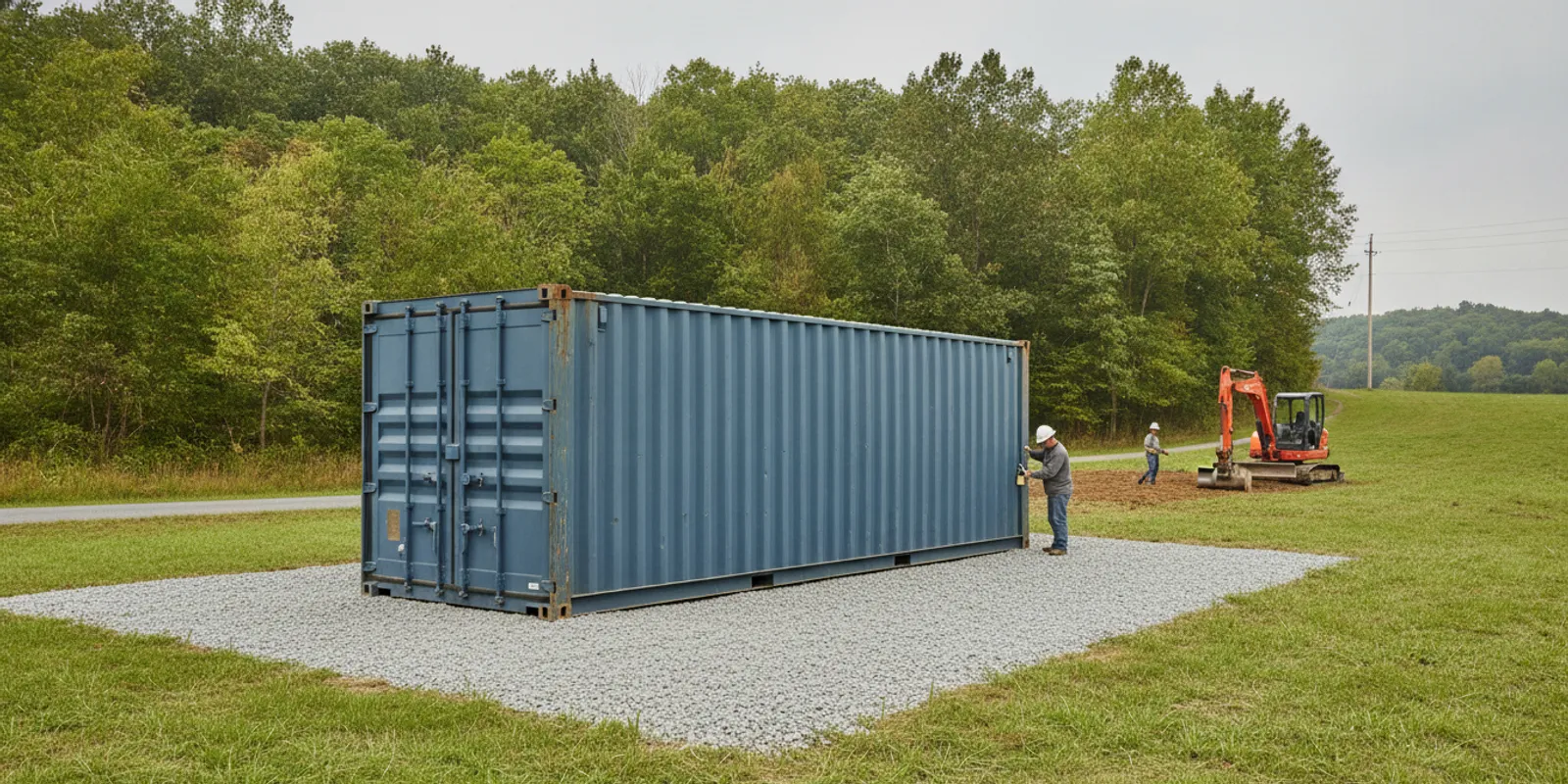
The patina needs wet and dry cycles. A box parked under a permanent roof drip, or set against wet soil, can keep one spot damp. Trapped moisture is harder on the film than open air. Set the container on a drained pad, and keep soil, mulch, and snow piles off the bottom rail. Mann's Cans can talk through placement when you request the quote.
Do not treat a brochure line that weathering steel never needs paint as a rule for your project. Freight boxes leave the factory with a coating on much of the shell. The steel underneath is still weathering steel. A used box may have lost paint on the ridges and kept it in the valleys. That patchwork is normal wear, not proof of two different metals.
How Wall Steel Differs From the Frame
Buyers often treat "the steel" as one thickness. It is not. Wall panels are the thin, ribbed skin. The frame is the skeleton that carries lifting and stacking loads. A scuff on a wall panel is common on a used box. Damage at a corner casting or a rail is a structural question, not a cosmetic one.
The comparison below separates the thin shell from the heavier frame. Read each row as its own question.
Part | Typical steel role | What to ask on a used unit |
Wall and door panels. | Corrugated weathering-steel sheet, often about 1.9 mm. | Are there holes, open seams, or patches you cannot see in a wide photo? |
Corner posts and rails | Heavier sections, often about 4.75 mm | Are posts straight, and are corner castings intact? |
Floor cross members | Steel joists under a plywood deck | Is the floor solid for your load, or only the walls? |
Door hardware | Steel bars, hinges, and locks on the door frame | Do both doors open, close, and latch without force? |
Use the table as a question list, not as a grade. Cargo-worthy and wind-and-watertight are condition labels. They are explained in the shipping container grading guide. Steel type does not pick the grade for you.
A 20-foot and a 40-foot dry box use the same basic steel idea. The longer box has more wall area and more cross members, not a different metal. Compare outside length and height in the dimensions guide before you assume a high cube is "thicker steel." Extra height is extra volume, not extra plate.
Roof sheet is steel too, and it is usually a lighter panel than the corner posts. It is also the face that takes standing water, falling branches, and people who should not walk up there. A soft or punctured roof matters more for storage than a scuffed side wall. Ask for a top-down photo if the unit sat under trees.
Forklift pockets, and the gooseneck tunnel on many 40-foot boxes, are steel details for handling. They do not change the wall alloy. They do tell you how the box was built to be moved. If you plan to relocate the unit later, say so. The delivery plan should match the hardware that is actually on the container.
What Surface Rust Means on a Used Container
Surface rust on weathering steel is normal. You will see it on ridges, along old rubs, and where paint has worn off. A tight brown film can be the protective layer doing its job. Loose scale, a hole you can see light through, or a stain running down an inside wall is a different story.
Ask for close photos of the roof, the top side rails, and the door frame. Those spots hold water. A wall that looks rusty in the middle of a rib is often less urgent than a roof seam that stays wet. Also ask whether any previous cargo left a smell or residue. Steel grade does not tell you what was hauled.
Paint can help once the box is parked for storage, especially if you want a certain color or if a repair broke the original surface. It is not required for the steel to exist. The painting guide covers prep and coatings. Do not sand a used box down to bright metal just because the patina looks uneven.
Look at repairs with the same care. A welded patch of ordinary steel can rust faster than the original weathering plate beside it. That is not a reason to reject every patched box. It is a reason to ask what was repaired, and whether the roof and door frame are included. A neat paint patch over an open seam is worse than an honest rusty rib.
If you are comparing a one-trip box with a used box, the steel family is the same. The difference is wear, dents, and how much of the original paint remains. One-trip versus used is a condition choice. Read that comparison on the one-trip versus used guide instead of treating new paint as a new alloy.
Previous cargo is a separate check from the metal. Weathering steel does not tell you whether a box hauled dry goods, machinery, or something that left an odor. Ask what the seller knows about prior use. If the inside smells sharp or shows a spilled residue, do not guess that paint will fix it.
Which Steel Questions Matter Before You Buy
Start with the job, then ask steel questions that change the fit. A locked storage box in Allegheny, Westmoreland, or Washington County needs sound walls, a roof that sheds water, and doors that latch. A workshop or office conversion needs a plan for cuts, because every opening removes original weathering steel.
Ask what the walls and frame are made of, and whether any panel was replaced.
Ask for photos of rust at the roof, rails, and door seals, not only a sunny side wall.
Ask whether the unit is confirmed wind and watertight, separate from how the paint looks.
Tell Mann's Cans what you will store or build so the condition can be matched to that use.
Confirm delivery access to the pad. Steel weight does not change a tight driveway.
Mann's Cans delivers in those three counties and the surrounding area within about 100 to 200 miles of Pittsburgh. Headquarters is at 362 Manor Harrison City Road, Suite B, Harrison City. Hours are Monday through Friday, 8:00 am to 5:00 pm. Reach the team through the contact page or at mann@mannscans.com.
Price ranges move with size and condition, so this page does not quote a number. The used 40-foot product page is the right next stop for current inventory. Rent-to-own terms, when offered, should be read in the agreement. Do not assume a first-and-last payment unless that agreement says so. Details live on the rent-to-own storage page.
Local rules are separate from the metal, too. A steel box can still need a permit or a setback check before it stays on site. Start with the Pennsylvania container permits page for that question. Mann's Cans can describe the container. Your municipality decides the placement rules.
Bring the use with the steel questions. A contractor storing tools wants latching doors and a dry interior. A farm storing implements wants a solid floor and a clear approach. A backyard box wants the same weathering steel, plus a site that drains. Say which job you are planning so the quote matches it.
Ready to match a used box to your site? Request a quote from Mann's Cans and include the size, the use, and photos of the placement area.
Frequently Asked Questions
Are shipping containers made from stainless steel?
A standard dry container is not stainless steel. The walls, doors, and frame are weathering steel, often called Corten. Stainless shows up in some tanks and specialty equipment, not in a typical used storage box.
How thick is shipping container steel?
A common dry-box description puts corrugated wall sheet near 1.9 millimeters and frame rails and posts near 4.75 millimeters. Ask about the unit you are buying. Patches and repairs can differ from the original sheet.
Does rust mean a used container is bad?
Light, tight surface rust is normal on weathering steel. Holes, open seams, heavy scale, or stains inside the box need a closer look. Mann's Cans still confirms wind and water tightness on the used containers it sells.
Is a 40-foot container made of thicker steel than a 20-foot?
No. Both sizes use the same weathering-steel approach. The 40-foot box is longer, so it has more wall area. Choose the length from the space you need, not from a thicker-metal myth.
Can I cut the steel for a door or window?
Yes, but a cut removes the original shell and needs a proper frame, flashing, and finish. Talk with Mann's Cans about the modification before you treat a storage box as a finished room.


Comments