


People searching for equipment shelters for sale are usually trying to get machines, tools, and job materials out of the weather without building a full shop. A fabric canopy, a pole building, and a steel shipping container can all be called a shelter. They do not answer the same job. A canopy covers a wide area and stays easy to walk around. A steel container locks, sheds rain and snow, and can be moved later. Mann's Cans plans that steel option as a custom container, not as a rack of ready-made fabric buildings.
Start custom container planning with Mann's Cans if you already know the machines that have to fit.
This guide stays on the buying decision: which shelter type fits the gear, how much floor you actually get, how weather protection changes the box, and where the unit can sit. It is written for contractors, shops, farms, and property owners around Pittsburgh who want a practical plan before they request a quote. The steel option starts with the storage containers Mann's Cans already sells in 20-foot and 40-foot sizes. If the gear is only farm equipment, the farm equipment storage guide is the better next read. This page is the broader shelter comparison.
What equipment shelters for sale actually cover
An equipment shelter is covered, usable space for things you do not want left in the open. That can be a skid steer, a mower fleet, welders, compressors, palletized parts, or seasonal inventory. The search phrase "equipment shelters for sale" mixes three products that look similar in photos and behave differently once they are on the ground.
Fabric and hoop shelters give a wide covered bay and fast seasonal cover. The skin is a membrane, so security is limited and the cover is a wear part.
Pole buildings and stick-built sheds give the most interior freedom, and they are a construction project with a foundation, a frame, and a longer schedule.
A shipping container is a finished steel box. Standard lengths are 20 feet and 40 feet. It arrives with lockable cargo doors, a roof, and a floor, and it can be modified for daily access.
Mann's Cans sells and modifies new and used 20-foot and 40-foot containers from Harrison City, Pennsylvania, and delivers across the Pittsburgh area. Unless you ask for something else, custom build-outs start from one-trip containers, which are basically new boxes that made one ocean trip. That is a different offer from an in-stock fabric shelter catalog, and this article does not pretend otherwise.
The right first question is not which shelter looks cheapest on a brochure. Ask what has to stay dry, what has to stay locked, and what has to roll in and out on a normal workday. A container wins when security and a movable steel shell matter more than a huge clear span. A fabric bay can still make sense beside it for bulky items that only need a roof.
Compare shelter types before you request a quote
Use the table as a planning screen, not as a price list. Mann's Cans quotes the container, the delivery, and any modifications after the gear list and the site are known. Fabric and pole figures move with span, snow design, and local labor, so they are not listed as Mann's prices here.
Planning point | Fabric or hoop shelter | Pole building | Steel container shelter |
What you are buying. | Frame plus a membrane cover. | A site-built structure. | A finished 20ft or 40ft steel box. |
Security. | Cover only. The skin can be cut. | Depends on doors and walls you build. | Steel walls, roof, and lockable cargo doors. |
Weather shell. | Good overhead cover. Edges leak wind-driven rain. | Strong when designed for local snow and wind. | Closed steel shell. Openings and the pad still need a plan. |
Floor space. | Wide clear span. | Whatever the footprint allows. | Narrow interior, about 8 feet outside width. |
Daily access. | Open sides or end doors you add. | Overhead doors you specify. | End cargo doors. Or a personnel door and wider openings you add. |
How it arrives. | Parts assembled on site. | Built in place. | Delivered as one unit by truck, sometimes with a crane. |
Later move. | Possible, often a rebuild. | Usually stays put. | Can be relocated if the site allows another delivery. |
A container is the wrong shelter when the machine is wider than the door path, or when you need a clear span for several vehicles side by side. It is a strong shelter when you need a locked room for tools, a dry bay for one machine, or a secure overflow store that might move to the next job.
External size is not a guess. ISO 668 sets the outside length, width, and height classes for series 1 freight containers, and ISO 1496 is the source for the matching internal sizes. For planning, treat a standard box as about 20 or 40 feet long and about 8 feet wide outside. Measure your own short list against those classes before you fall in love with a photo. A carrier container specification that follows those classes is a practical check: Hapag-Lloyd container specification.
Match floor space to the machines, not the brochure
Brochure length is the outside of the box. Usable floor is what is left after door swing, a walk path, and the space a machine needs to turn or to sit on its trailer tongue. A 20-foot container is a strong fit for tools, compressors, mowers, and one compact machine. A 40-foot container is the better bay when you need to drive in, park, and still walk past the equipment.
High-cube containers add interior height. That extra height matters for a cab, a lifted machine, or stacked crates. It does not make the box wider. Width is the limit most buyers miss. If two pieces of equipment must sit side by side with a person between them, one container is usually the wrong shelter, and two boxes or a different building deserve a look.
Write the gear list in the order you will use it. Put daily tools near the door you will actually open. Put seasonal machines at the far end. Leave a straight aisle if you have to pull one item without unloading three others. The shipping container dimensions guide and the 20ft versus 40ft comparison go deeper on size. Use them for the numbers, then come back here for the shelter decision.
Condition changes the floor plan too. A one-trip container gives you clean floors, tight original door seals, and a shell that is easier to modify. A used cargo-worthy or wind-and-watertight box can still shelter equipment if the floor is sound and the doors close square. Mann's Cans stocks both new and used 20-foot and 40-foot containers, so the condition choice is part of the quote, not a separate scavenger hunt.
Open-top and side-open styles exist when a machine must drop in from above or slide in from the side. Those are special shells, not the default shelter. Read the open-top container guide only if overhead loading is a real requirement. For most tools and rolling equipment, standard end doors plus one added opening are simpler.
Plan door clearance and daily access
Cargo doors are excellent for a full unload. They are a poor daily door if you only need a wrench. Each time you swing both doors open, you need clear ground in front of the box and you expose the whole interior. A personnel door in the long side lets a person in without opening the cargo end. A wider added opening is what lets a mower or a small loader roll in without a circus.
Measure three things before you ask for an opening:
The widest point of the machine, including mirrors, buckets, and racks.
The tallest point, including a roll bar, exhaust, or antenna.
The straight run in front of the door so you can approach without a sharp turn.
Add a few inches past those numbers. Paint, door seals, and a slightly uneven pad all steal clearance. If the machine only fits on paper, it will not fit on a cold morning when the door seal is stiff.
Tell Mann's Cans which opening you need during custom container planning. Basic modifications such as a personnel door, a window, vents, or a simple electrical outlet are a different scope from insulation, interior walls, or a full workshop build. The heavy-duty storage modification guide covers structural cuts in more detail. This page only needs you to name the door the equipment will use.
Security sits next to access. A shelter that is open all day is a roof, not a lockup. Cargo-door lock boxes, a personnel-door lock, and a site that is visible from your normal path all matter. The container security guide is the place for lock and alarm choices. Do not spend that detail budget until the door layout is settled, because every new opening is another thing to secure.
Choose weather protection for a closed steel shell
A closed container already blocks rain better than a fabric side. Western Pennsylvania still punishes a careless setup. Wind-driven rain finds a tired door gasket. Snow piles against the doors. Condensation forms on the ceiling and drips onto steel tools. Weather protection is a set of choices, not a single upgrade.
Start with the shell you buy. A one-trip container has newer seals and less hidden rust. A used container can be the right budget shelter if someone has checked the roof, the door gaskets, and the floor. Ask what "used" means on that exact unit. Cosmetic dents are not the same problem as a soft floor or a door that will not seal.
Then decide how closed the shelter stays. Vents reduce condensation and let fumes escape if you run a small engine briefly or store fuel cans. They also let in moist air. Passive vents are enough for many tool rooms. A workshop where people work for hours needs a bigger airflow plan, which belongs in the ventilation guide, not in a guess on a sales form.
Insulation and a better floor help when the shelter is also a light workshop, or when temperature swings soak the tools. They are optional for a pure lockup that you open, grab a machine, and close. Snow and wind still act on the box and on anything you attach to it. Read the Pennsylvania winterizing guide and the wind-load guide if the site is exposed, high, or already drifts in January. Those pages own the engineering questions. Here, the point is to flag them before you buy a shell that cannot take the add-ons you want.
Keep liquids in rated containers, and do not treat a standard shelter as chemical storage. Fuels, solvents, and fertilizers need their own rules. If that is the real use, switch to the chemical storage guide instead of forcing this page to cover it.
Place the shelter so delivery and drainage both work
The best floor plan fails if the truck cannot set the box where you want it. Mann's Cans delivers in the Pittsburgh region, including Westmoreland County and Washington County, typically within a long local radius of Harrison City. Flat, reachable sites often take a tilt-bed truck. Tight yards, overhead lines, and stacked placements may need a crane. Crane work is an extra placement, not a surprise you want on delivery day.
Walk the route the way the driver will drive it. Note gate width, low branches, soft spots after rain, and the turn from the public road. A container is long. The last twenty feet of the driveway matter as much as the pad. The delivery preparation guide is the checklist for that route.
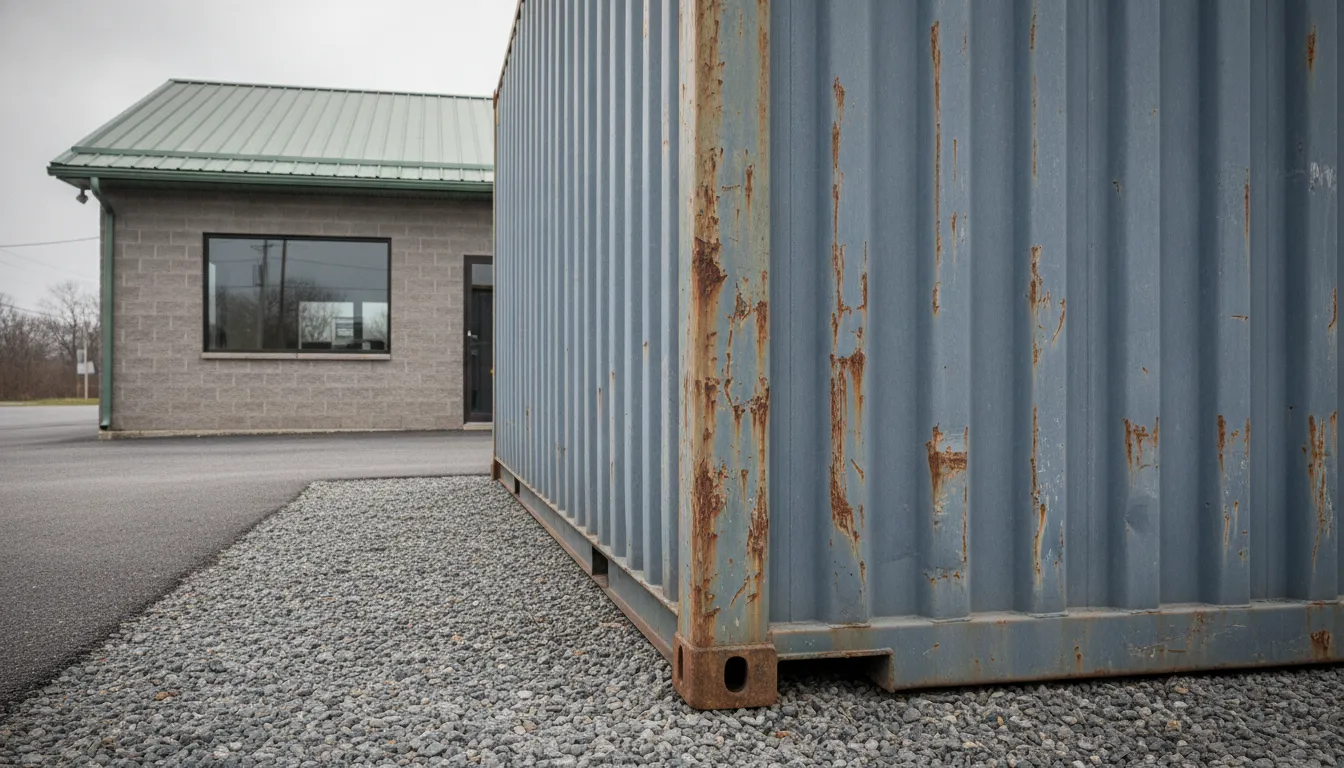
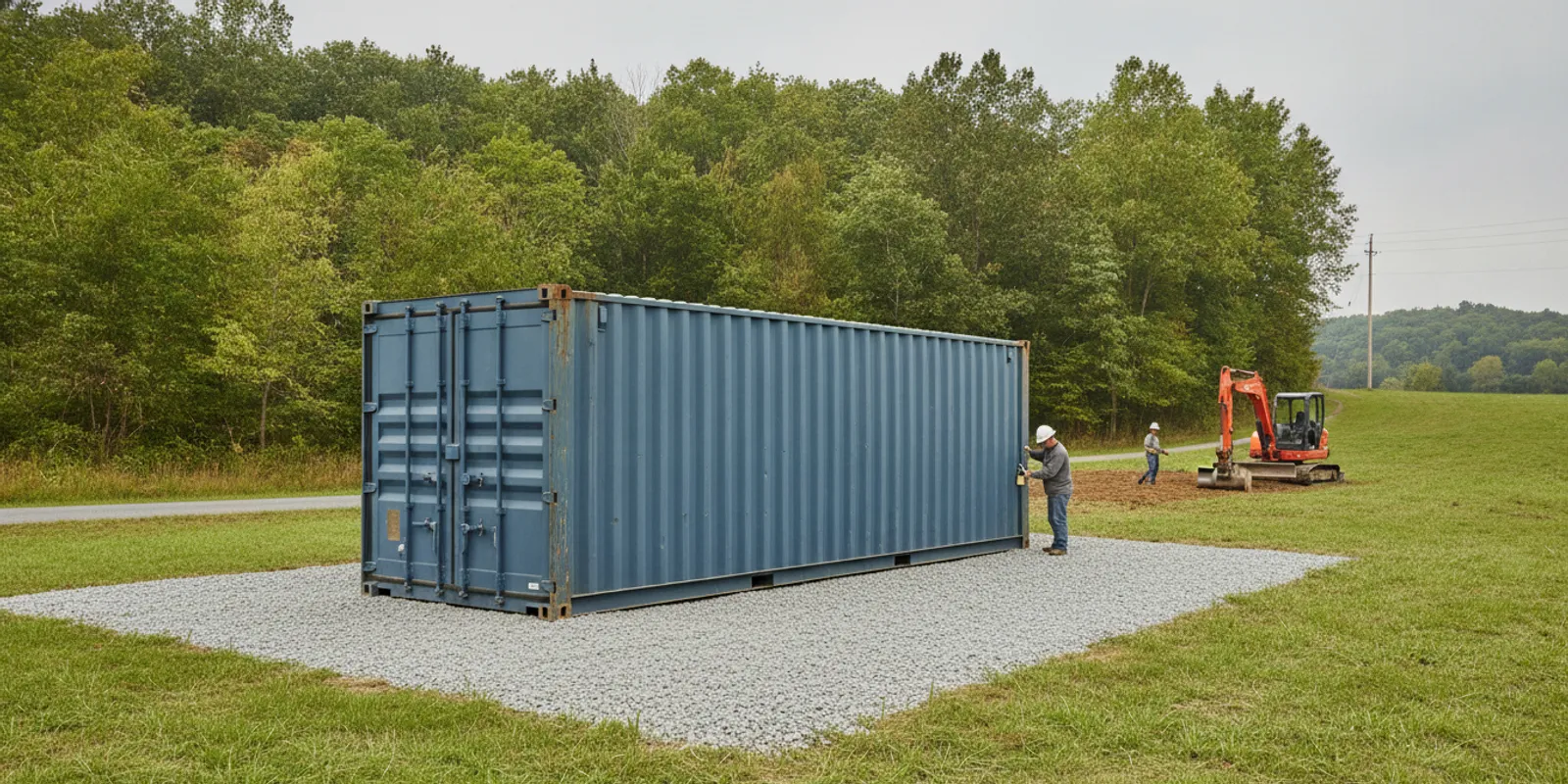
The pad is the other half of placement. Gravel, concrete blocks or piers, and a slab each change drainage and how permanent the shelter feels. The goal is simple: keep the steel floor off standing water, keep the doors above the grade, and give rain a path away from the box. The foundation options guide compares those pads. Use it before you spread stone, because moving a full container to fix drainage is a second delivery.
Set the doors on the side you will approach from the shop or the driveway, not on the side that looks best in a photo. Leave room to swing cargo doors if you still rely on them. Keep the box out of the natural ditch, and do not block the only turnaround a fuel truck or a trailer needs.
Local placement rules are a separate question from the shelter comparison. Townships around Pittsburgh do not share one answer about setbacks, accessory structures, or how long a container may sit on a commercial lot. The permits overview lists the questions to ask your municipality. Confirm them before you pour a pad. Mann's Cans can help you plan the container. It does not replace the local zoning call.
Decide what to tell Mann's Cans on the consult
A useful consult is short when the facts are ready. You do not need a finished drawing. You do need enough detail that the quote matches the shelter you pictured.
List each machine or material group, with length, width, and height.
Say whether you need daily walk-in access, drive-in access, or mostly locked storage.
Choose a starting size: 20-foot or 40-foot, new one-trip or used.
Name the openings you want: cargo doors only, a personnel door, vents, or a wider equipment door.
Describe the pad and the delivery path, including any hill, gate, or overhead wire.
Say whether the shelter might move later, or whether it should sit for years.
Share the budget early. Mann's Cans builds custom containers for storage, offices, and commercial spaces, and the scope only stays affordable when the must-haves are separated from the nice-to-haves. A locked, vented equipment shelter is a smaller project than an insulated workshop with power and interior walls. Both are possible. They should not share one vague number.
Look at past projects for the kind of custom work the shop already does. Product pages show the shell. This article is the planning step that sits in front of those pages. Rent-to-own is available as a purchase path on many containers. Confirm the upfront amount and the term in the current agreement rather than assuming a standard down payment.
Use the quote form if you would rather talk the measurements through. The contact page lists weekday hours of Monday through Friday, 8:00am to 5:00pm, at 362 Manor Harrison City Rd, Harrison City, PA 15636.
Request a container consult once your gear list and site notes are written down.
Frequently asked questions
Are equipment shelters for sale the same as shipping containers?
No. The phrase covers fabric shelters, pole buildings, and steel containers. A shipping container is the lockable steel option. Mann's Cans plans and supplies that container. It does not sell a fabric shelter line.
What size container works as an equipment shelter?
A 20-foot container fits tools and one compact machine if the door path is clear. A 40-foot container is the better choice when you need to drive in and still walk past the gear. Width, not length, is the usual limit. Measure the machine before you pick the box.
Can you add a door so you do not open the cargo doors every day?
Yes. A personnel door is a common basic modification, and a wider opening can be planned when a machine must roll in. Tell Mann's Cans the machine's width and height so the opening is cut for that path, not for a generic sketch.
Will a container keep equipment dry in a Pennsylvania winter?
A sound shell with working door seals keeps rain and snow off the gear. You still need a pad that drains, and you should plan for condensation. Vents, and insulation when you need them, are part of that plan. Exposed sites should also be checked against local snow and wind before you add roof gear or large openings.
Do I need a permit for an equipment shelter?
Sometimes. Rules vary by township, use, and how permanent the placement is. Ask the local office about accessory structures and setbacks before delivery. A container quote does not include a permit approval.
Bring the machine sizes, the door you need, and a few notes about the pad. That is enough to turn a shelter search into a container plan that matches the yard you have.

Comments