


A 2nd hand shipping container can be a practical choice for job-site storage, equipment, or other needs when you understand its condition and plan for delivery. Photos and a grade label are useful starting points, but they do not replace clear answers about the specific unit, its doors, floor, roof, and placement at your site.
What should you decide before comparing a 2nd hand shipping container?
Start with the job the container must do. A unit holding weather-sensitive materials needs a different level of confidence in its enclosure than one used for temporary storage of rugged equipment. A container that will be opened several times a day should have doors and locking hardware that are comfortable to operate. If you intend to convert it into a workspace or another occupied use, treat that as a separate design and approval project rather than assuming a used freight box is ready for it.
Write down what you will store, how often you need access, how long you expect to keep the unit, and what conditions it will face. Note the approximate size and height needed, too. Mann's Cans offers used containers in 20-foot and 40-foot configurations, with standard and high-cube inventory listed among its offerings. Check current availability and specifications before deciding that a particular size or height is in stock.
Use:
List the contents and whether they need protection from rain, dust, or unauthorized access.
Access:
Consider how often doors will open and whether you need room for equipment to approach.
Duration:
Compare buying with a rental if your need is temporary.
Future work:
Identify any planned windows, doors, insulation, electrical work, or other changes before purchase.
For dimensions and selection basics, compare shipping container types and review Mann's Cans' storage container options. The right match depends on how you will use the unit and what can be delivered to your site, not simply on the largest size available.
How do you compare 2nd hand shipping container condition grades?
Used containers can have different histories and degrees of wear. Ask the seller what condition description applies to the unit being offered and what that description means in practical terms. Mann's Cans lists used inventory in condition grades including cargo-worthy and wind-and-water-tight (WWT). A grade is a useful shorthand, not a substitute for asking about the particular container and your intended use.
For storage, the key question is whether the unit's current condition fits the level of protection you need. Ask whether the doors close and latch properly, whether visible holes or damage are present, and whether the roof, seams, and floor have issues that matter for your contents. Ask how the container was inspected, when it was last checked, and whether there are photographs of the unit or representative inventory. If you need a specific unit rather than a selection from available stock, make that clear before the quote is finalized.
Do not treat "used" as a single, uniform condition. Surface rust, dents, prior repairs, faded paint, and scuffed floors may be cosmetic or may signal a more important issue; context matters. Likewise, a container described as weather tight should be discussed in terms of the seller's inspection and your expectations. Ask what is and is not included in the condition description, and have any material condition representation noted in the order documents.
What should you inspect on the doors and locking gear?
Doors are among the most important moving parts to assess. A container may look sound from the outside but be frustrating to use if the doors bind, the locking bars are damaged, or the seals do not sit as intended. If an in-person inspection is possible, operate both doors fully. If you are comparing by photos or a remote assessment, request current images and a clear description of how they operate.
Open and close each door through its full travel. Notice sticking, scraping, or a need for unusual force.
Check that locking bars, handles, retainers, and hinges appear present and move as expected.
Look at the rubber door seals around the perimeter. Ask about gaps, tears, hardening, or sections that are missing.
With the doors closed, check whether the door edges meet evenly and whether the locking arrangement can be secured.
Ask whether any door repair or adjustment is already known to be needed, and who would handle it.
Use care when operating heavy doors, especially in wind or on uneven ground. Do not put fingers into hinge or pinch points. If a container will be accessed often or by multiple workers, consider the real-world usability of the doors, not just whether they can be made to close once during a quick inspection.
How should you check the floor, roof, walls, and weather tightness?
Look over the interior and exterior as a whole. A floor can show normal wear from freight use, but soft spots, broken boards, significant gaps, or areas that appear compromised deserve follow-up. Ask what the floor is made of and whether there are known repairs or damage. For heavy equipment, check that the intended loads and movement are appropriate for the specific unit; do not assume a visual check establishes a structural rating.
Inspect or request close views of the roof, corners, seams, and wall panels. Look for holes, punctures, badly distorted areas, open seams, or repairs that are difficult to assess in a wide-angle image. Inside, examine the roof and walls for signs that may indicate water entry, such as staining or dampness. These clues are reasons to ask for more information, not proof by themselves of a current leak or a particular cause.
Ask how weather tightness was assessed and whether any openings, patches, or other repairs are present. A simple, agreed inspection can help: look at the inside when the container is dry, close the doors, and ask what testing or observations the seller uses to confirm the stated condition. Do not rely on a single photo taken in ideal light to establish that every seam and corner is sound.
Also consider the intended contents. A used container is not automatically climate controlled or free of condensation. If you plan to store moisture-sensitive goods, ask about ventilation, insulation, and the conditions required for that material. Those features may require separate planning or modification. A used unit's basic enclosure should not be confused with a finished, temperature-managed storage environment.
When technical specifications or freight-container terminology matter to your project, consult the relevant standards information from the International Organization for Standardization (ISO) and ask a qualified professional about requirements for your specific application. A standards reference does not replace a physical condition check or local project review.
Which checks matter most for your intended use?
Use a consistent checklist when comparing units. A container that is acceptable for one job may not suit another, so rank each item by importance rather than focusing only on paint or appearance.
Area | What to check or ask | Why it matters |
Doors and seals | Operation, locking bars, hinges, alignment, and seal condition | Frequent access and protection depend on usable doors and a well-fitting closure. |
Floor | Visible wear, soft spots, broken boards, gaps, and known repairs | Contents and equipment need a floor suited to the planned use. |
Roof and walls | Holes, severe distortion, open seams, patches, and signs of water entry | Damage may affect the level of protection and need for repair. |
Condition description | Meaning of the stated grade and what is excluded from it | Shared definitions help prevent mismatched expectations. |
Site and delivery | Access, clearances, ground, placement point, and unloading method | A suitable unit still needs a safe, workable route and landing area. |
Future modifications | Planned cuts, doors, insulation, utilities, or interior work | Changes can affect layout, cost, and professional or permit review. |
Record what you learn in one place, including the date of the photos and whether they show the exact unit or an example. Compare like with like: the same length, height, stated grade, delivery assumptions, and any known repairs. If two offers use different terms, ask each seller to explain them instead of treating the labels as interchangeable.
How do delivery and placement affect the decision?
Before choosing a container, check that the delivery vehicle can reach the proposed location and set the unit down as planned. Consider the width and height of the route, overhead branches or wires, gates, turns, slopes, soft ground, and space for the truck to maneuver. Take clear photos of the approach and placement area. Share them with the provider early, especially if the container must go behind a building or close to a fence.
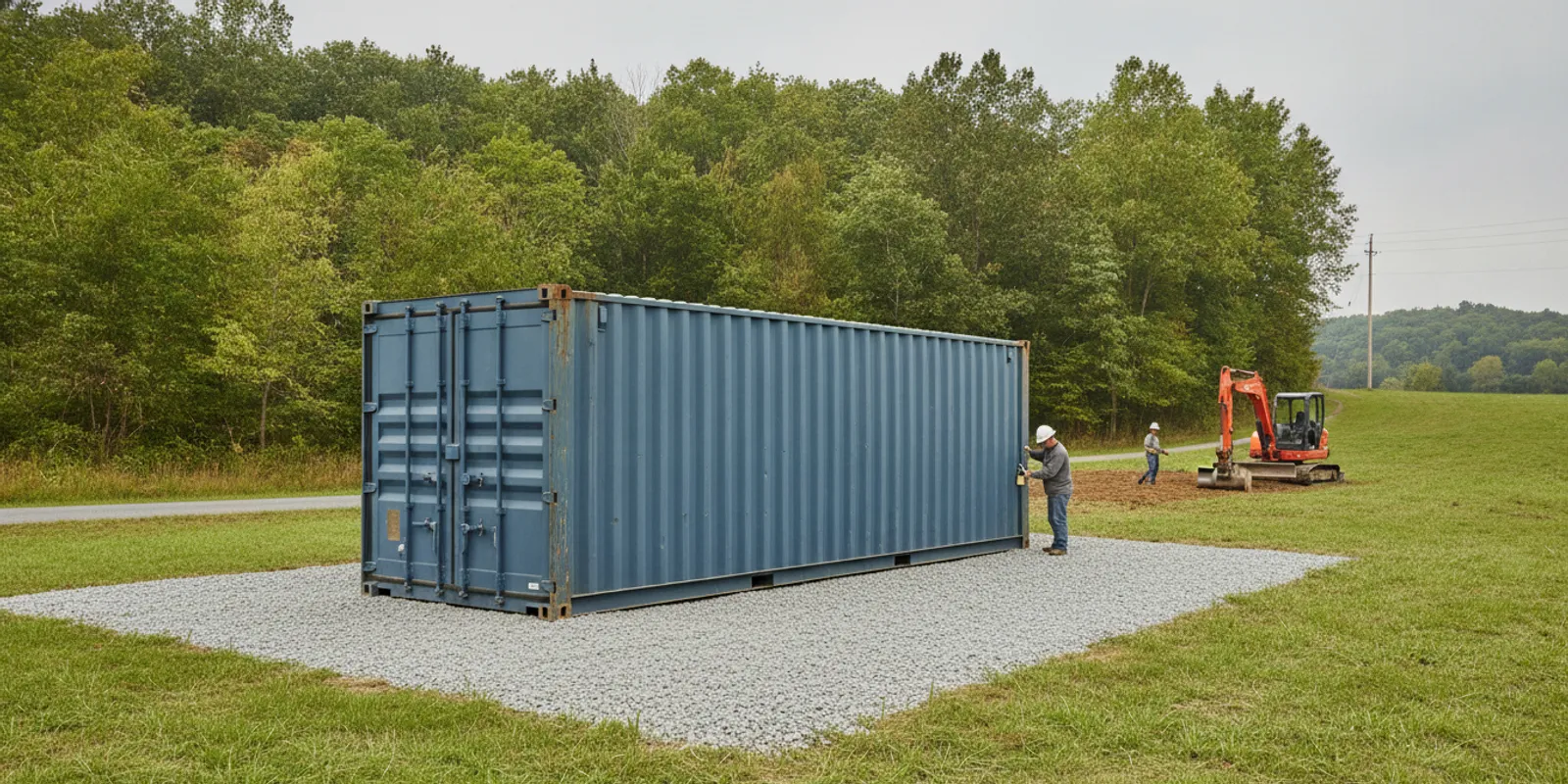
Ask what ground preparation is recommended and what placement equipment is expected. Mann's Cans provides delivery and placement guidance, and its service information describes tilt-bed delivery and crane services for challenging installations. Confirm which method applies to your site, whether special access conditions affect the plan, and what you need to do before delivery day. Review the shipping and delivery policy and confirm the details for your order directly.
Level, stable support is important for a container's placement and later door operation. Ask the provider what preparation is appropriate for your location and planned load. Do not assume a truck can cross a lawn, narrow driveway, or soft area without risk. If ground work or access changes are needed, arrange them before scheduling the drop-off.
For a used 40-foot unit, consider the footprint and delivery route before committing. You can compare current used 40-foot containers with the available used 20-foot containers. A smaller unit may fit a difficult site better, while a longer unit may suit a larger storage requirement. Review container weight considerations as part of planning, and ask for the specific unit's relevant details rather than relying on a general estimate.
How can you compare quotes fairly?
A low initial number is not a useful comparison unless you know what it covers. Ask for the same information from each provider: unit size and height, condition description, delivery, placement assumptions, any known repairs, and whether modifications are included or separate. If a price depends on distance, site access, or a particular inventory item, get that distinction in writing.
Mann's Cans lists new and used container sales, rentals, and rent-to-own options. If you need a container for a limited period, ask whether rental fits your timeline; if you expect to keep it, compare purchase and rent-to-own terms. Do not assume the purchase price includes site preparation, utility connections, or conversion work. Ask for a quote that separates the container from any additional work, so you can decide what to handle now and what can wait.
For background on evaluating a used unit, see the used portable storage buying checklist. The shipping container FAQ can also help with common questions. Check current details with Mann's Cans because availability, condition, and delivery arrangements can vary by unit and site.
What should you send when requesting an assessment?
A focused request makes it easier to discuss a suitable container and identify unanswered questions. Include:
Your intended use and the materials or equipment you plan to store.
The size and height you prefer, plus whether you could consider another option.
Your preferred condition level and any must-have details for doors, floor, or weather protection.
Your location and photos of the delivery route, entrance, and proposed placement area.
How long you need the container and whether you are considering purchase, rental, or rent-to-own.
Any planned modifications, such as an added door, windows, insulation, electrical service, or interior finish.
Your desired timing and the best way to follow up.
Ask the provider to confirm whether the quoted photographs represent the exact unit, what the stated condition covers, what delivery includes, and what remains your responsibility. If you have a strict deadline or a site constraint, state it at the beginning rather than after selecting inventory.
Frequently asked questions
Is a 2nd hand shipping container suitable for long-term storage?
It can be, if the specific unit's condition, doors, and enclosure meet your needs and the container is placed on a suitable site. Confirm the condition description, ask about known repairs, and consider whether your contents need ventilation or climate control.
What does WWT mean when comparing a used container?
WWT means wind-and-water-tight in the seller's condition terminology. Ask how the specific unit was checked, what the description includes, and whether there are known openings, repairs, or limits relevant to your intended storage.
Should I buy a 20-foot or 40-foot container?
Choose based on the volume and dimensions of what you will store, how you need to access it, and the space and route available at your site. A 40-foot unit offers a longer storage space, but it also needs a suitable placement area and delivery access. Ask about current sizes and inventory before deciding.
Can I inspect a container before purchase?
Ask the provider what inspection options are available and whether you can view the particular unit. If you cannot visit in person, request recent detailed photographs and direct answers about doors, floor, roof, walls, seals, and repairs. Confirm how the agreed condition will be documented.
What is the practical next step?
Choose your must-have condition points, check the delivery route, and collect photos and site details before comparing options. Then review available used 40-foot containers and send your requirements for a quote.
A clear request about the container, its intended use, and the delivery site is the best starting point for finding a used unit that fits the job.


Comments