

Updated: 2 days ago

A shipping container delivery crane may help when a truck cannot reach the intended placement area or must lift the unit over an obstacle. Whether a crane is appropriate depends on the container, the lift path, the site, and the equipment available. Before scheduling, confirm the details with the delivery provider and any qualified professionals involved in the placement.
This guide focuses on crane-assisted lift planning and the questions to ask a delivery provider. For the broader delivery route, truck clearance, and access options, read shipping container delivery access guidance. For grading, drainage, pads, and other property-readiness topics, see how to prepare property for shipping container delivery. Those guides cover general access and site preparation, so this article keeps its attention on crane-specific placement decisions.
When might a shipping container delivery crane be needed?
A crane is one possible way to handle a container when it must be lifted into position instead of unloaded directly beside a truck. The need is usually driven by the final placement location or obstacles between the truck and that location. It is not simply a matter of choosing a preferred delivery style: the provider has to determine whether an appropriate crane and lift plan can safely serve the specific site.
Consider asking about crane placement when one or more of these conditions apply:
- The container needs to go behind an obstacle.
A wall, building, fence, or other feature may prevent a truck from backing close enough to the intended location. A crane may be considered if the lift can reach the landing area and the obstruction can be cleared safely.
- The truck cannot approach the final location.
A narrow drive, a steep or uneven route, a soft surface, or limited turning space could affect access. A lift may be an alternative, but the crane itself still needs a suitable place to arrive, set up, and operate.
- The placement area is offset from the delivery route.
A yard, work area, or storage spot may sit away from the route a delivery vehicle can use. The provider needs to assess distance, lift path, and the space available around the destination.
- The desired landing spot is elevated or separated.
A raised area, a retaining feature, or a site layout may make direct unloading difficult. Do not assume a crane can reach over or across it; ask the provider to evaluate the actual layout.
- There are overhead or ground-level obstacles.
Wires, branches, roofs, adjacent buildings, slopes, and buried or visible site features can affect whether and how equipment can be set up. Flag them early rather than expecting the operator to resolve them on arrival.
These are prompts for a site conversation, not a determination that a crane is necessary. If truck placement is possible, it may be simpler. If a crane cannot access or safely serve the site, another location or delivery plan may be needed. For general planning around moving a container, review shipping container moving considerations; this article focuses on crane-specific questions rather than every delivery method.
What does a crane change about the delivery plan?
With direct truck placement, the delivery vehicle approaches the landing area and unloads the container according to its equipment and operating limits. With a crane-assisted plan, the container is lifted and guided through a defined path before it is set down. That adds important coordination points: where the crane will set up, where the container will travel while suspended, what may be under or near that path, and how the final landing area will be reached.
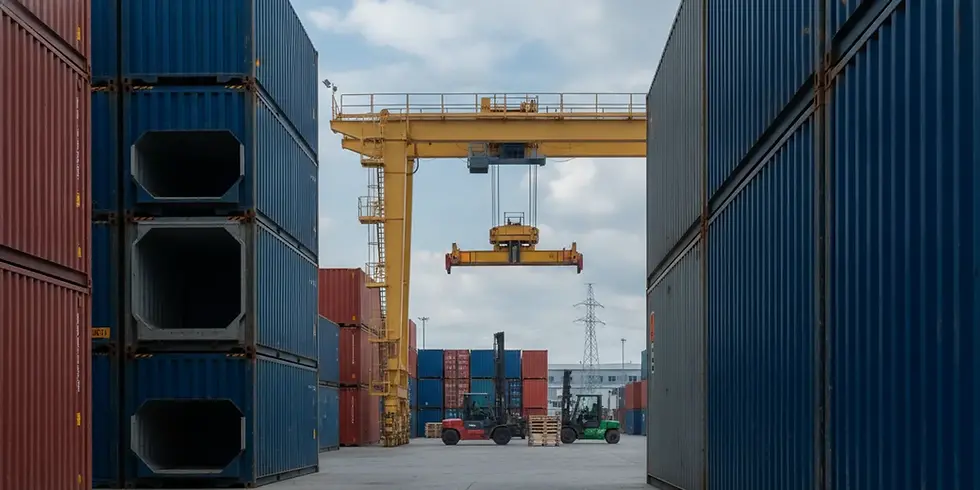
Crane handling is also used in port operations. A statement to a U.S. House committee describes sensors on a crane detecting and identifying a shipping container as the crane engages and lifts it from a ship. That example concerns port equipment, not a residential delivery specification, but it illustrates that lifting a container is a planned equipment operation rather than an improvised maneuver. Read the statement describing crane container handling.
For a local delivery, ask the provider to explain what equipment and placement approach are being considered for your site. Do not use a port example, a video, or another property's successful lift as proof that the same configuration will work at your location. The container, equipment, route, and site conditions can differ substantially.
What should you confirm before booking a shipping container delivery crane?
Share enough information for the provider to assess the whole trip from arrival to final set-down. A street address alone does not describe the approach, setup area, obstacles, or intended orientation. Get answers to these questions before finalizing the delivery plan:
- Is crane placement available for this order and location?
Confirm availability rather than assuming every delivery includes crane service. Mann's Cans lists crane services for challenging installations, but the provider still needs to determine whether the requested placement is suitable and available.
- What container and load details do you need?
Share the container size and type, whether it will be empty or contain anything, and any known modifications. Ask which details affect the provider's equipment selection and lift assessment. Do not guess the container's weight or treat a published maximum payload as the weight of your particular unit.
- What site information should I send?
Ask whether the provider wants photos, a simple site sketch, measurements, or an on-site assessment. Take clear pictures from the entrance, the proposed setup area, the intended landing spot, and any tight or obstructed portions of the route.
- Where does the crane need to set up?
Identify the proposed setup location and ask what space and ground conditions the provider needs to evaluate. Do not assume a driveway, lawn, or roadside area can support equipment just because it supports ordinary vehicles.
- What is the proposed lift path?
Discuss the route the container would travel from the delivery position to the landing area. Point out nearby structures, wires, trees, fences, parked vehicles, and areas used by neighbors or workers. Ask who will confirm that the route and landing zone are suitable.
- What site preparation must be completed before arrival?
Get a specific list of tasks, the deadline, and who is responsible for each one. Ask whether obstacles must be moved and whether access needs to remain clear. Site preparation should follow the provider's instructions and advice from qualified local professionals where needed.
- Who coordinates permissions and safety controls?
Ask whether the provider expects you to coordinate access or local permissions, and who is responsible for managing people near the work area. Responsibilities can vary by job. Do not assume a delivery company or property owner has handled every local requirement.
- What would cause a delay or a change of plan?
Clarify how the provider handles unsuitable ground, obstructed access, weather concerns, changed site conditions, or equipment that cannot be positioned as planned. Ask what happens if the crew arrives and the setup or lift path differs from the information supplied.
If you are comparing unit sizes, the intended container matters to the delivery conversation. Mann's Cans has information about brand-new 20-foot containers and brand-new 40-foot containers. Confirm the specific unit dimensions, condition, and delivery details with the provider instead of relying on a general size label alone.
What crane-specific site information should you share?
Give the provider information that helps evaluate the crane setup, lift path, and landing zone. You do not need to turn a photo package into an engineering report. The goal is to show the actual conditions that could affect a crane-assisted placement.
- Show the proposed setup area.
Identify where the crane might stand, what lies beside it, and whether that space is shared or controlled by someone else.
- Show the lift path.
Photograph overhead wires, branches, roofs, retaining features, fences, and other obstacles between the crane and the landing zone.
- Mark the landing point and orientation.
Indicate where the container should land, which way the doors should face, and how much room is available for the provider's placement plan.
- Describe changing conditions.
Note construction, parked equipment, landscaping, temporary storage, or any work that may change before the scheduled delivery.
- Ask what needs professional review.
If the site includes a slope, retaining structure, unusual surface, or nearby utility, ask the provider which qualified party should evaluate it.
This information supports a provider conversation; it does not approve a lift or guarantee that a crane can serve the property. Keep general route planning and property preparation with the linked guides above, and use this section for crane setup, lift-path, and landing-zone details.
What should you compare before choosing a placement approach?
Compare the delivery options against the actual problem you need to solve. A truck's unloading equipment may be suitable when it can reach the planned spot and place the unit as required. A crane may be worth considering when a lift is needed, but it adds a separate setup and lift-path assessment. In some cases, changing the landing spot or clearing the route may be more practical than arranging a different method.
Placement question | Direct truck placement | Crane-assisted placement |
What is the main consideration? | Whether the delivery truck can reach and unload at the intended area. | Whether suitable crane equipment can set up and lift along an approved path to the landing area. |
What information should you provide? | Route, turning space, access limits, intended position, and obstacles. | All direct-placement details, plus crane setup space, lift path, overhead clearance concerns, and landing-zone details. |
What should you ask the provider? | Can the truck reach the spot and place the container in the required orientation? | Is the crane plan available and appropriate for this unit and site, and what must be cleared or coordinated? |
What can change the plan? | Blocked or unsuitable access, route conditions, or a landing area the equipment cannot reach. | Setup limitations, lift-path conflicts, ground or site concerns, or a change in the container or site information. |
What is the next step if it is not suitable? | Ask whether a different landing spot or access plan could work. | Ask whether a different setup, landing spot, or delivery approach is possible; do not proceed on assumptions. |
This is a planning comparison, not an equipment specification or quote. Only the delivery provider can confirm the available methods, requirements, and costs for a particular order. For general container availability in the Pittsburgh area, see Mann's Cans storage container options, then discuss the delivery details for the specific unit and property.
What issues should you raise before the delivery date?
Raise concerns early, especially anything that may affect access, setup, the lift path, or final placement. Avoid waiting until the delivery vehicle is on site to disclose a low wire, a new fence, a change in ground condition, or a neighbor's access restriction. Early communication gives the provider a chance to review the plan and say whether more information or a different approach is needed.
Ask for clarity about the following:
- Changing conditions:
Who should you contact if the route or landing area changes after the site review?
- Weather and scheduling:
Does the provider need to reassess if conditions change on the scheduled day, and how will a delay be communicated?
- Access coordination:
When must gates, driveways, parking spaces, or shared areas be clear, and who is responsible for coordinating them?
- Placement tolerances:
How precisely can the unit be positioned, and what should you do if the planned location has limited room for adjustment?
- Unexpected obstacles:
What is the process if the crew identifies a conflict that was not visible in the photos or assessment?
Keep the answers with your delivery notes. If multiple people are involved in preparing the property, share the agreed plan with them so the site is ready and expectations match. For additional delivery questions, the Mann's Cans FAQ is another place to review general information, but confirm job-specific instructions directly with the provider.
What belongs in a crane placement confirmation?
Keep the crane-specific decisions in writing so the customer, provider, and other people involved are working from the same plan. This record does not replace the provider's assessment or instructions. It simply makes open questions visible before equipment is scheduled.
- Container and load:
Record the unit size, type, condition, modifications, and whether anything will be inside. Give the provider accurate information rather than estimating the load.
- Setup and lift plan:
Note the proposed crane position, lift path, landing point, and door orientation, along with questions that remain unresolved.
- Site information:
Save current photos and measurements requested by the provider. Date them and identify temporary conditions that may change.
- Responsibilities:
Write down who will provide access, communicate with neighbors or site owners, and complete any provider-requested preparation.
- Change process:
Confirm who to contact if weather, ground conditions, equipment, access, or the landing point changes before delivery.
- Day-of contact:
Confirm the best contact person and the process for a reassessment if the actual site differs from the information supplied.
Review the confirmation shortly before delivery and report meaningful changes instead of quietly adjusting the plan. The provider may need to reassess a different landing spot, changed obstacle, or new condition. A written plan improves coordination, but it cannot make an unsuitable site suitable.
Frequently asked questions
Does every shipping container delivery require a crane?
No. A crane is one possible placement method. Whether one is needed depends on the route, the intended landing spot, the delivery equipment, and site conditions. Ask the provider whether direct truck placement is suitable before assuming a crane is necessary.
Can a crane place a container over a house, fence, or trees?
Do not assume it can. An obstacle can affect the lift path, equipment setup, clearance, and safety planning. Share photos and site details with the provider, and let qualified professionals evaluate any technical questions. The provider must confirm whether a proposed lift is appropriate.
Can I decide where the crane sets up?
You can explain your preferences and identify areas that may be available, but the provider must assess whether a setup location is suitable for the equipment and plan. A driveway or lawn should not be presumed appropriate without that review.
Should the container be empty during a crane lift?
Ask the delivery provider. The container's contents and total load can affect the information needed to evaluate a lift. Give an accurate description of the unit and anything inside it, and follow the provider's instructions. Do not estimate or conceal a load.
Will a crane guarantee exact placement?
No delivery method should be treated as a guarantee of exact positioning without confirmation from the provider. Discuss the desired location and orientation in advance, ask how much adjustment is possible, and make sure the landing area is ready.
How do you move from planning to a confirmed delivery?
Start with the container you want and the exact place you want it to land. Send the provider clear site information, disclose obstacles and changing conditions, and ask which placement methods are available for that combination of container and property. Confirm responsibilities, preparation, scheduling, and what happens if the site cannot be served as planned. Mann's Cans provides container solutions in the Pittsburgh region; use the contact page to discuss your delivery questions, or review the shipping and delivery information for general details.
A clear plan gives you and the delivery provider a better basis for deciding whether a crane-assisted placement is appropriate for your site.

Comments